Studio apartments have become one of Australia’s most talked-about entry points into the property market, offering an appealing mix of affordability and inner-city convenience. Typically ranging from around 25 to 40 square metres, these compact, single-space homes appeal to young professionals, downsizers, and investors chasing strong rental yields in high-demand locations. But studios aren’t for everyone, and they come with unique complexities that catch many buyers off guard.
Most Australian lenders apply minimum floor size requirements, often around 40 to 50 square metres, meaning studio buyers can face restricted borrowing options, higher deposit requirements, and limited access to lenders mortgage insurance. Resale demand, strata fees, and long-term capital growth also warrant closer scrutiny than with standard one or two-bedroom apartments.
Understanding who a studio genuinely suits, and who it doesn’t, is essential before committing to a purchase. This guide breaks down typical studio sizes, investment potential, and lending considerations, helping you decide whether this compact property type fits your goals, with the right guidance behind every decision.
What Is a Studio Apartment? Typical Sizes and Layouts
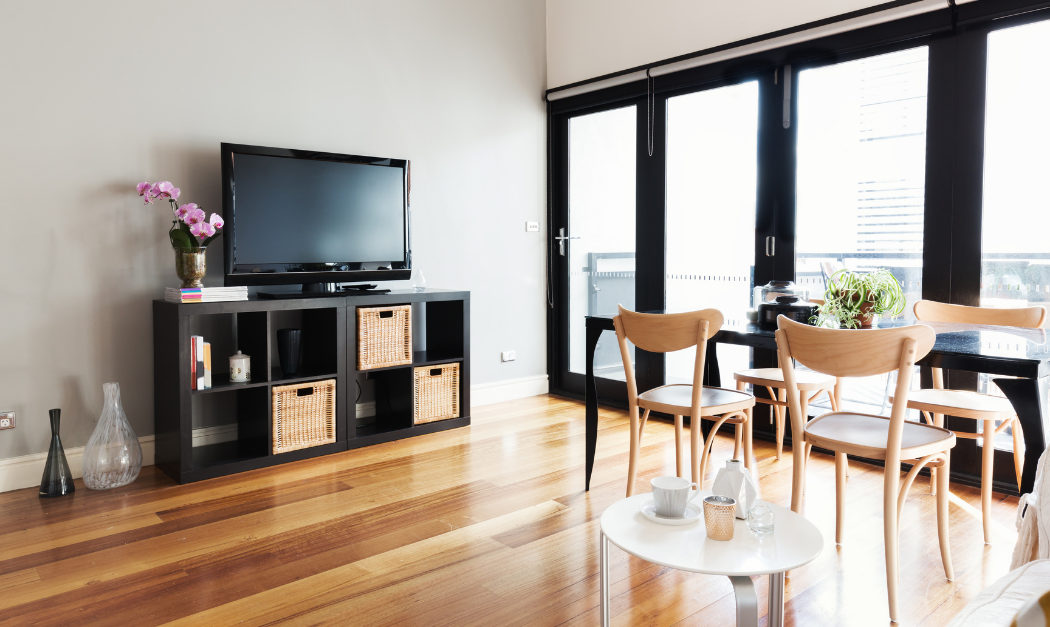
A studio apartment is a self-contained home where the bedroom, living area, and kitchen share a single open-plan space, with no internal wall separating the sleeping zone from the rest of the dwelling. Unlike a one-bedroom apartment, a studio does not have an enclosed bedroom. Most studio apartments in Australia still include a fully enclosed bathroom and a compact kitchenette, even though the remaining living space is combined into one room.
Studio apartments in Australia typically range from around 25 to 40 square metres of internal living space, excluding balconies and car spaces. Some inner-city developments include studios as small as 25 square metres, while larger studios closer to 40 square metres may offer a partial partition or a slightly separated sleeping nook. This is considerably smaller than a standard one-bedroom apartment, which generally starts at around 50 square metres of internal living area.
The exact classification of a property as a studio versus a one-bedroom apartment can vary between developers, real estate listings, and lenders, which creates genuine confusion for buyers. A unit marketed as a ‘one-bedroom’ apartment may in fact be assessed as a studio by a bank if the bedroom is not fully separated from the living space by a permanent wall. This distinction matters significantly, because a property’s classification directly affects how lenders assess it for finance. A Moove buyer’s agent reviews the actual floor plan and internal living area of a property before a client makes an offer, so buyers know exactly how a specific apartment will be classified and financed, rather than relying on how it happens to be marketed.
Studio living suits buyers who prioritise location, affordability, and simplicity over space. Many studio apartments are concentrated in inner-city and near-city locations across Sydney, Melbourne, Brisbane, Perth, and Adelaide, close to transport, universities, and employment hubs. This positioning is a large part of their appeal to young professionals, students, and downsizers, but it also means competition for well-located studios can be strong. Moove’s buyer’s agents operate locally across these markets, which means clients get on-the-ground insight into which studio developments genuinely deliver on location and long-term liveability, rather than relying on listing photos and marketing copy alone.
Who Studio Apartments Suit Best
Studio apartments tend to suit buyers who value affordability and location over space, making them a natural fit for several distinct groups of Australian buyers rather than a one-size-fits-all property type. First home buyers are often drawn to studios because they offer a lower entry price point into competitive inner-city markets in Sydney, Melbourne, Brisbane, Perth, and Adelaide, where a one or two-bedroom apartment may be financially out of reach. For many first home buyers, a studio represents a realistic way to stop renting and start building equity, provided the lending and resale trade-offs are properly understood from the outset. A Moove buyer’s agent works specifically with first home buyers to assess whether a studio purchase aligns with both their budget and their long-term goals, rather than simply chasing the cheapest available listing.
Young professionals and students form another core audience for studio apartments, largely because these properties cluster around universities, hospitals, and central business districts across Australia’s major cities. For someone prioritising a short commute, low maintenance, and simple living over extra square metres, a well-located studio can offer genuine lifestyle value. This group tends to be less concerned with long-term capital growth and more focused on immediate liveability, which shifts the buying priorities compared to a family purchasing a forever home.
Downsizers represent a growing segment of studio buyers, particularly those looking to simplify their lifestyle, reduce upkeep, or free up capital from a larger family home. For a downsizer, a studio apartment can offer a low-maintenance base in a well-connected location, though the transition from a house to a single open-plan space is a significant lifestyle shift that deserves careful consideration. Moove’s buyer’s agents work closely with downsizers to identify properties that genuinely support this next chapter, rather than properties that simply happen to be smaller.
Property investors chasing rental yield rather than long-term capital growth are also active in the studio apartment market, drawn by strong tenant demand from students and young professionals in inner-city locations. However, studio apartments carry investment-specific risks around financing and resale that differ from standard one-bedroom units, which is covered in detail in the investment potential section of this guide. Moove’s investment-focused buyer’s agents assess these risks against a client’s specific strategy before recommending a studio as a suitable investment vehicle, ensuring the purchase supports real portfolio growth rather than growth on paper alone.
Investment Potential: Rental Yields and Demand
Studio apartments can offer strong rental yields for property investors, largely because their lower purchase price relative to one and two-bedroom apartments improves the ratio of rental income to capital outlay. Across Australia, units generally deliver higher rental yields than houses, driven by lower entry prices and steady tenant demand from professionals, students, and downsizers. As of early 2026, the national average gross rental yield sits at around 4.7%, though well-located inner-city apartments near universities and employment hubs can significantly exceed this figure.
Tenant demand for studio apartments is closely tied to proximity to universities, hospitals, and central business districts, since these are the locations where students and young professionals most want to live. Suburbs with strong university proximity have recorded rental yields well above the national average for units, reflecting how concentrated tenant demand in a specific location can meaningfully lift investment returns. For a studio apartment specifically, this demand driver matters more than for most other property types, because the tenant pool skews heavily towards singles and couples seeking a compact, well-located, low-cost rental rather than a larger family home. Moove’s investment-focused buyer’s agents assess this tenant demand data suburb by suburb, helping investors identify studio locations where rental demand is genuinely structural rather than a temporary spike.
Rental yield is only one half of the investment equation, and studio apartments generally underperform larger apartments on capital growth over the long term. This is partly because the pool of future buyers for a studio apartment is smaller than for a one or two-bedroom apartment, which can limit resale demand and, by extension, price growth. Investors chasing cash flow rather than long-term capital appreciation may find this trade-off acceptable, but it needs to be weighed deliberately rather than overlooked in favour of an attractive yield figure alone. A Moove buyer’s agent works with each investor to clarify whether their strategy is genuinely yield-focused or growth-focused before recommending a studio apartment, since the right property looks very different depending on which goal takes priority.
Population growth and constrained rental supply continue to support tenant demand for well-located studio apartments across Australia’s capital cities into 2026, with national rental vacancy rates remaining historically tight. However, a strong rental market does not eliminate the financing challenges that are unique to studio apartments, which can restrict both the initial purchase and the eventual resale of the property. These lending considerations are detailed in the next section of this guide, and they are essential reading for any investor weighing up a studio apartment purchase.
Lending Considerations for Studio Apartments
Studio apartments face lending restrictions in Australia that do not apply to standard one or two-bedroom apartments, primarily because most banks assess a property’s internal living area before approving a home loan. Most Australian lenders require a minimum internal living area of between 40 and 50 square metres, excluding balconies and car spaces, before they will approve standard home loan terms. Since many studio apartments fall below this threshold, ranging from around 25 to 40 square metres, buyers can find their choice of lenders significantly narrowed compared to buying a larger apartment.
When a studio apartment falls below a lender’s minimum size threshold, the most common consequence is a reduced loan-to-value ratio, meaning the buyer needs a larger deposit to proceed. Many lenders will not offer more than 80% of the purchase price on a smaller apartment, and some require a deposit of 20% or more before they will consider the loan at all. This directly affects affordability for first home buyers, who may have budgeted around a smaller deposit based on standard lending terms rather than the stricter requirements that apply specifically to studio apartments. A Moove buyer’s agent flags these financing implications for a specific property before a client makes an offer, so there are no unwelcome surprises during the loan approval process.
Lenders mortgage insurance, or LMI, is another factor that becomes more complicated with studio apartments. Because many insurers view smaller properties as a higher resale risk, buyers borrowing above 80% of the purchase price may find LMI difficult or impossible to obtain on a studio apartment, even if they would qualify easily on a larger unit. This means some studio apartment buyers are effectively required to fund a larger portion of the purchase price from savings, rather than relying on standard finance structures.
Every lender applies its own size thresholds and lending policies, and a property that is declined by one bank may still be approved by another. This inconsistency makes it essential for buyers to confirm a property’s exact internal living area and discuss financing options with a lender or mortgage broker before signing a contract, particularly given that studio apartments are sometimes marketed in ways that do not clearly state their true floor size. Moove’s buyer’s agents work alongside each client’s mortgage broker throughout the purchasing process, helping ensure that a studio apartment under consideration is actually financeable under the client’s specific loan terms before any offer is made, rather than discovering a lending obstacle after the fact.
Risks and Trade-Offs to Weigh Up
Beyond the lending restrictions covered earlier in this guide, studio apartments carry a set of risks that buyers should weigh carefully before committing to a purchase. Chief among these is limited resale demand, since the pool of buyers interested in a studio apartment is smaller than the pool interested in a one or two-bedroom apartment. A smaller buyer pool can mean a longer time on market when it comes time to sell, and in a softer market, it can also place downward pressure on the eventual sale price relative to larger apartments in the same building or area.
Strata fees are another cost that studio apartment buyers frequently underestimate, particularly in buildings with extensive shared amenities such as pools, gyms, or concierge services. These fees are charged regardless of the apartment’s size, which means a studio apartment owner can end up paying strata levies similar to those of a much larger apartment in the same complex, eroding the cost advantage that first attracted them to a studio in the first place. Reviewing a building’s strata reports and levy history before purchasing is essential, since strata fees can vary significantly between buildings even in the same suburb.
Lifestyle trade-offs also deserve genuine consideration, particularly for anyone planning to live in a studio apartment long term rather than purely as an investment. A single open-plan space suits many buyers extremely well, but it offers little flexibility for a change in circumstances, such as a growing family, a live-in partner, or simply the desire for more storage and separate living zones over time. Buyers should think honestly about how long they intend to stay in a studio apartment and what their living situation might look like in five or ten years, rather than focusing solely on the immediate affordability benefit.
Finally, studio apartments in older or purpose-built serviced apartment complexes can carry additional risks around building classification, since some lenders treat serviced apartments and studios with management rights differently to standard residential studios. This distinction can affect both financing and long-term capital growth, and it is not always obvious from a real estate listing alone. A Moove buyer’s agent conducts this level of due diligence on every property under consideration, checking strata health, building classification, and resale trends before a client commits to a studio apartment, so the trade-offs are fully understood upfront rather than discovered after settlement.
Is a Studio Apartment Right for You? Key Questions to Ask
Deciding whether a studio apartment is the right purchase comes down to a handful of practical questions that every buyer should work through before making an offer. The first is whether the purchase is primarily about living in the property or investing in it, since this single decision shapes almost every other consideration, from location priorities to how much weight to place on rental yield versus long-term capital growth. A first home buyer prioritising an affordable entry into the market has different priorities to an investor chasing strong rental returns near a university, even though both may end up considering the same studio apartment.
Buyers should also ask how long they realistically expect to stay in the property, particularly if they intend to live in it themselves. A studio apartment can be an excellent short to medium-term solution for a single professional, a student, or a downsizer seeking simplicity, but it becomes a more difficult fit if a change in circumstances, such as a live-in partner or a growing family, is likely within the next few years. Being honest about this timeframe helps clarify whether a studio apartment is a genuine long-term home or a stepping stone towards a larger property later on.
Financing capacity deserves equally careful thought, given the lending restrictions and deposit requirements that apply specifically to studio apartments, as outlined earlier in this guide. Buyers should confirm with a lender or mortgage broker what deposit and loan terms will actually apply to a specific studio apartment before making an offer, rather than assuming standard home loan terms will apply. This step alone can prevent a great deal of stress and disappointment later in the buying process, particularly for buyers with a smaller deposit who may find their options more limited than expected.
Finally, buyers should ask whether they have properly assessed the specific building, including its strata fees, building classification, and resale history, rather than judging the studio apartment purchase on price and location alone. A property that looks affordable on paper can become considerably less attractive once strata levies, lending restrictions, and resale risk are factored in. Working through these questions with a Moove buyer’s agent gives buyers an objective, data-backed view of whether a specific studio apartment genuinely suits their goals, rather than relying on assumptions that may not hold up once the fine print is reviewed.
Is a Studio Apartment the Right Move for You?
Studio apartments occupy a distinct place in the Australian property market, offering genuine advantages in affordability and location, alongside real trade-offs in financing, resale, and long-term liveability. For first home buyers seeking an accessible entry point, young professionals and students prioritising location over space, downsizers wanting a simpler lifestyle, or investors targeting strong rental yield near universities and employment hubs, a well-chosen studio apartment can be a smart and strategic purchase. For others, particularly those anticipating a change in lifestyle or household size in the near future, a studio apartment may only ever be a short-term solution rather than a long-term home.
What separates a good studio apartment purchase from a costly mistake usually comes down to the details covered throughout this guide: confirming the property’s true internal living area, understanding exactly how a specific lender will treat that size when assessing finance, and reviewing strata fees and building classification before signing a contract. These are not details that should be left to chance or discovered after settlement, particularly given how much they can affect both affordability and future resale value.
This is precisely where a Moove buyer’s agent adds real value. Rather than navigating floor plans, lending restrictions, and strata reports alone, Moove’s local buyer’s agents assess every studio apartment against a client’s specific goals, budget, and financing position, so buyers can move forward with clarity rather than guesswork. Whether the goal is a first home, a downsizing move, or a yield-focused investment, having an experienced advocate in your corner can be the difference between a studio apartment that works hard for you and one that quietly holds you back.
Spend 30 minutes with one of our property experts to better understand Moove and how we can help you buy your home. Book your FREE consultation with Moove today and find out whether a studio apartment is the right move for your next property purchase.