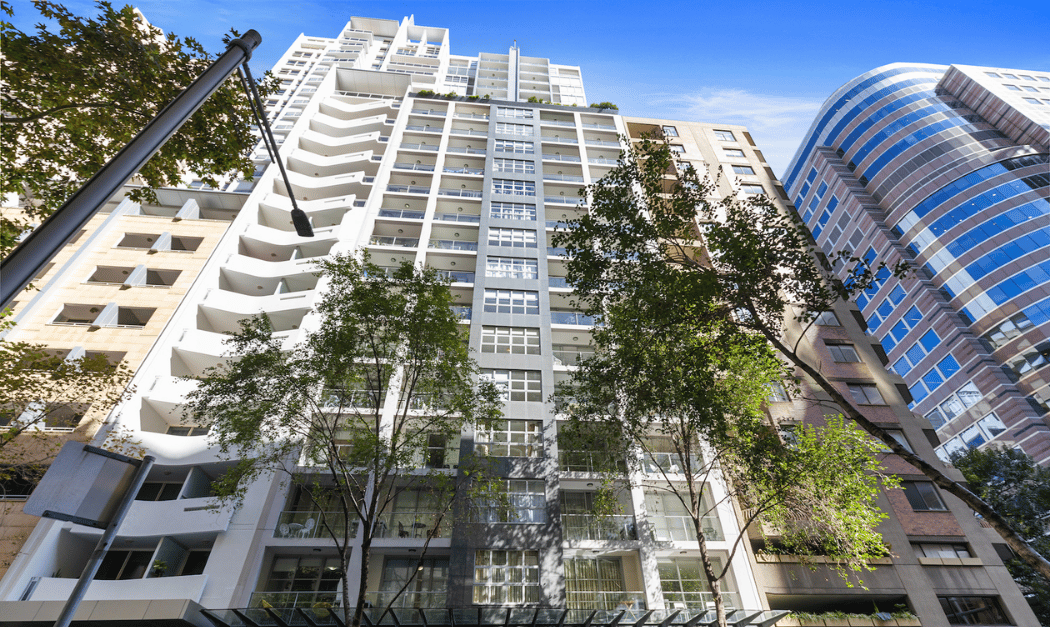
High-rise apartments have become a defining feature of Australia’s capital cities, offering buyers a foothold in locations that houses and townhouses often can’t touch on price. From Sydney Harbour views to Brisbane’s riverside towers, these buildings promise lifestyle, convenience and often a lower entry cost than standing detached homes nearby. But buying into a high-rise isn’t as simple as picking a floor and a floorplan.
Owners Corporation rules, strata fees, building quality, and the sheer number of comparable units in a single tower can all affect liveability and long-term value in ways that catch first-time buyers off guard. Some towers hold their value beautifully. Others become cautionary tales.
This guide breaks down what actually counts as a high-rise apartment in Australia, the genuine pros and cons of buying one, and the questions worth asking before signing a contract. Whether you’re chasing a city lifestyle or a smart investment, understanding these factors first can save you from a costly mistake, and a buyers agent can help you tell the difference before you commit.
What Is a High-Rise Apartment?
A high-rise apartment in Australia generally refers to a self-contained unit within a residential tower of around nine storeys or more, sharing a single building, common entry points, and shared facilities with other residents. The Australian Bureau of Statistics classifies apartment buildings into four height bands: low-rise (1 to 3 storeys), medium-rise (4 to 8 storeys), high-rise (9 to 19 storeys), and super high-rise (20 storeys or more). In everyday property listings and buyer conversations, “high-rise” is often used more loosely to describe any large-scale tower of 10 storeys or above, particularly when it includes lift access, shared amenities, and a body corporate or owners corporation managing the building.
High-rise apartments differ from low-rise and boutique developments in both scale and structure. A boutique apartment building typically holds fewer than 20 to 40 units, with a more intimate feel and limited shared facilities, while a high-rise tower can contain hundreds of individual apartments stacked across dozens of floors. This scale brings genuine advantages, including lifts, swimming pools, gyms, rooftop terraces, and sometimes full-time concierge or building management, but it also means a buyer’s apartment is one of many similar units competing for attention at resale, which can affect both pricing and how quickly a unit sells.
High-rise living is heavily concentrated in Australia’s capital cities, particularly Sydney, Melbourne, and Brisbane, where land scarcity and inner-city demand have driven vertical development. Precincts such as Sydney’s Barangaroo, Melbourne’s Southbank and Docklands, and Brisbane’s inner-city corridors are known for their concentration of high-rise residential towers, often built alongside retail, dining, and entertainment precincts. Because these buildings vary enormously in construction quality, age, and financial management from one tower to the next, no two high-rises can be judged by the same standard, even within the same suburb.
This variation is exactly where buyers tend to get caught out, assuming that a well-located tower automatically means a well-run one. A buyer’s agent can independently assess a specific building’s strata reports, sinking fund position, and maintenance history before a buyer commits, rather than relying on a real estate agent’s pitch or a glossy display suite. At Moove, this due diligence is built into how our buyers agents evaluate any high-rise apartment on a client’s behalf, helping buyers separate genuinely well-managed towers from those carrying hidden financial or structural risk.
The Pros of Buying a High-Rise Apartment
Location is one of the strongest arguments in favour of a high-rise apartment. Towers are concentrated in Australia’s most sought-after inner-city and waterfront precincts, places where land is scarce and detached housing is either unavailable or priced well beyond most buyers’ budgets. A high-rise apartment can put a buyer within walking distance of the CBD, major employment hubs, transport, and lifestyle precincts in a way that a house in the same city often can’t, simply because there’s no equivalent housing stock left to buy in that location.
Price is the other major drawer. Units and apartments generally offer a lower entry cost than houses in the same suburb, which matters enormously for first-home buyers and investors trying to get a foothold in expensive capital city markets. In many parts of Sydney, Melbourne, and Brisbane, the price gap between houses and units has widened to the point where a well-located apartment is the only realistic way to buy into a blue-chip suburb without stretching well beyond a comfortable budget.
Shared amenities are a genuine lifestyle benefit unique to larger buildings. Many high-rise towers include facilities such as swimming pools, gyms, rooftop terraces, and concierge or building management services, extras that would cost a house buyer significantly more to replicate on their own property. For owner-occupiers who value convenience and a lock-up-and-leave lifestyle, and for buyers who want security features like secure entry and on-site staff, a high-rise apartment can offer a level of amenity and peace of mind that’s difficult to find in standalone housing at the same price point.
For investors, high-rise apartments in well-located precincts tend to attract strong and consistent rental demand, particularly from tenants who value proximity to work, transport, and lifestyle amenities over land size. Premium high-rise stock with strong views or a prime address can also perform well in rising markets, and constrained new apartment supply in several capital cities has supported healthy rental yields in recent years.
None of these advantages are guaranteed simply by buying into a tall building, however. The gap between a high-rise apartment that delivers on lifestyle and rental performance and one that underperforms almost always comes down to the specific building, floor level, and precinct, not the fact that it’s a high-rise at all. This is where a buyer’s agent earns their keep, using local market data and building-level due diligence to identify which towers are genuinely well-positioned for growth or rental demand, rather than leaving buyers to guess based on a display suite and a sales brochure.
The Cons of Buying a High-Rise Apartment
Strata fees are typically higher in a high-rise apartment than in a smaller or boutique building, and this is one of the first costs buyers underestimate. Maintaining lifts, pools, gyms, rooftop terraces, and full-time building management adds up quickly, and as a rough guide, average quarterly strata fees for a standard two-bedroom apartment in 2026 sit between $1,500 and $3,000 in Sydney, $1,200 and $2,500 in Melbourne, and $1,000 and $2,000 in Brisbane. These fees also tend to rise over time as maintenance needs grow, so a building that looks affordable today can become considerably more expensive to hold in five or ten years.
Building defects are a genuine and well-documented risk in Australian high-rise construction. A 2023 New South Wales Government strata study found that more than half of apartment buildings registered since 2016 had at least one serious defect, with average rectification costs exceeding $330,000 per building, and waterproofing and fire safety issues among the most common problems identified. High-profile cases such as Sydney’s Opal Tower and Mascot Towers, both of which required emergency evacuations due to structural cracking, highlighted how quickly defects in a large, complex building can escalate into a costly and disruptive problem for every owner in the strata scheme. It’s worth noting that more recent NSW surveys have shown a decline in serious defects in newer buildings, reflecting tighter regulation, but due diligence on any individual tower remains essential.
Resale competition is another factor unique to large-scale towers. Because a single high-rise building can contain hundreds of near-identical apartments, sellers are often competing directly against their own neighbours at resale, which can put downward pressure on price and extend the time a property sits on the market. This is a structural feature of high-rise living that doesn’t apply in the same way to boutique developments or houses, where each property is more distinct.
Land content is minimal to non-existent in a high-rise apartment, and this affects long-term capital growth potential in ways that are easy to overlook when a buyer is focused on lifestyle or view. Because a buyer owns a share of the building and its common property rather than the land itself, growth is driven far more by the specific building’s condition, location, and scarcity than by land value appreciation.
Given how much a single building’s financial health and construction quality can vary, even within the same postcode, a buyer’s agent’s role in reviewing strata reports, defect history, and sinking fund adequacy before purchase becomes one of the most practical ways to avoid inheriting someone else’s expensive problem. At Moove, this kind of building-level scrutiny is standard practice before any high-rise apartment is recommended to a client.
Strata, Owners Corporation & Building Management
Every high-rise apartment in Australia is part of a strata scheme, meaning ownership is shared between the individual apartment owner and a collective body known as the owners corporation, or body corporate in Queensland. This body is responsible for managing, maintaining, and insuring the building’s common property, including lifts, foyers, car parks, and any shared amenities, and every apartment owner is legally required to contribute to its running costs through strata levies. Understanding how this structure works matters more in a high-rise than in a smaller complex, simply because there are more owners, more shared infrastructure, and more decisions being made collectively on a buyer’s behalf.
A strata report is one of the most important documents a buyer can review before purchasing a high-rise apartment, and it should never be skipped. This report typically includes the minutes of recent owners corporation meetings, the building’s insurance details, any history of disputes or legal action, and crucially, the state of the sinking fund, which is the pool of money set aside for major future repairs and capital works. A healthy sinking fund suggests a well-managed building that’s financially prepared for ageing infrastructure, while a poorly funded one can signal a large special levy on the horizon, an unplanned lump-sum payment demanded of every owner to cover an unexpected repair bill.
Building management quality also varies significantly between towers, even within the same suburb. Some high-rise buildings employ full-time on-site managers who handle maintenance proactively and keep detailed records, while others are managed remotely by a strata management company with limited on-site presence. This difference shows up over time in how quickly repairs are addressed, how well common areas are maintained, and how transparently the owners corporation communicates with residents, all of which affect both liveability and resale value.
Because strata reports are lengthy, technical, and easy to misread without experience, many buyers either skip this step entirely or don’t know what red flags to look for. A buyer’s agent who reviews strata reports as a routine part of due diligence can identify warning signs such as recurring maintenance disputes, an underfunded sinking fund, or a pattern of special levies well before a buyer is contractually committed. This is one of the areas where Moove’s buyers agents add the most value for high-rise purchasers specifically, flagging financially or structurally troubled buildings early so a client never finds out about a looming levy after settlement.
High-Rise vs Low-Rise vs Townhouse: Which Suits Your Goals?
Choosing between a high-rise apartment, a low-rise or boutique building, and a townhouse comes down to a trade-off between lifestyle, ongoing costs, and long-term growth potential, and the right answer depends heavily on whether a buyer is purchasing to live in or to invest. There’s no universally “better” option here; each property type suits a different set of priorities, and the same building that’s perfect for one buyer can be entirely wrong for another.
A high-rise apartment tends to suit buyers who prioritise location, lifestyle amenities, and a lock-up-and-leave lifestyle over space or land ownership. Towers in inner-city and waterfront precincts offer walkable access to work, transport, and entertainment that houses and townhouses in the same suburb often can’t match, and shared facilities such as pools, gyms, and concierge services add genuine day-to-day convenience. The trade-off is higher strata fees, more resale competition from similar units in the same building, and minimal land content, which can mean slower capital growth over the long term compared with land-based property.
A low-rise or boutique apartment building, typically under four storeys with fewer than 20 to 40 units, generally suits buyers who want a quieter, more private living environment with lower strata costs. Because these buildings have fewer comparable units for sale at any one time, they often see stronger buyer competition and more consistent capital growth, particularly in well-located, low-density suburbs favoured by owner-occupiers. The trade-off is fewer shared amenities and, in some cases, older building stock that may require more individual maintenance attention.
A townhouse sits between an apartment and a full house, typically offering more internal space and some private outdoor area, along with a share of land, while still involving a strata or community title scheme for shared driveways, fencing, or common gardens. Townhouses tend to suit families or downsizers who want more room than an apartment provides without taking on the maintenance of a full house block, and their land component generally supports stronger long-term capital growth than a high-rise apartment.
For investors specifically, the decision often comes down to tenant demand and yield rather than personal lifestyle preference, since the type of tenant a property attracts varies significantly by property type and location. Because these trade-offs are rarely obvious from a listing alone, and the right property type genuinely depends on a buyer’s specific goals, budget, and time horizon, this is exactly where a buyer’s agent’s independent, data-led guidance helps buyers avoid choosing a property type that looks appealing but doesn’t actually suit their circumstances.
Key Questions to Ask Before Buying a High-Rise Apartment
Before making an offer on a high-rise apartment, a buyer should ask how old the building is and what its maintenance and defect history looks like. Newer buildings, particularly those completed since 2020, generally carry a lower risk of serious defects than buildings from the 2015 to 2022 construction boom, a period linked to a documented rise in issues such as water ingress, cladding, and fire safety non-compliance. Requesting the building’s defect inspection reports and any records of past rectification work gives a much clearer picture than relying on how polished the foyer or display apartment looks.
The strata report deserves the same scrutiny as the contract of sale itself. Buyers should check the sinking fund balance against the building’s age and likely future repair needs, review recent owners corporation meeting minutes for any disputes or unresolved maintenance issues, and confirm whether any special levies have been raised in the past two to three years. A building with a thin sinking fund and a history of special levies is signalling a future expense that hasn’t been priced into the purchase yet.
Floor level and aspect matter more in a high-rise than buyers often expect, affecting everything from natural light and noise exposure to resale appeal and rental demand. A lower floor near a busy road or a unit with a poor aspect can sit on the market longer and attract weaker rental interest than an equivalent apartment several floors up with better light or a quieter outlook, even within the exact same building.
Comparable sales within the same tower are one of the most useful data points a buyer can gather, since a high-rise building often contains dozens of near-identical units that have sold or leased in recent months. Reviewing how similar apartments in the same building have performed on price and time-on-market gives a far more accurate read on true value than comparing against apartments in different buildings across the suburb.
Finally, buyers should ask what the ongoing strata levies actually cover, whether they’re likely to rise, and what amenities or building management services are included for that cost. A high monthly fee isn’t necessarily a red flag if it reflects genuine building quality and proactive management, but it’s a problem if it’s funding a poorly maintained building with a history of disputes.
Working through these questions properly takes time, access to sales data, and the ability to interpret a strata report correctly, which is precisely the kind of due diligence Moove’s buyers agents carry out on a client’s behalf before any high-rise apartment purchase is recommended.
Ready to Buy the Right High-Rise Apartment?
A high-rise apartment can be one of the smartest property decisions a buyer makes in Australia, or one of the most expensive mistakes, and the difference rarely comes down to the fact that it’s a high-rise at all. It comes down to the specific building: its age, its strata financial health, its defect history, and how well it’s managed. Two towers on the same street can offer completely different outcomes for an owner, which is exactly why building-level due diligence matters more here than in almost any other property type.
The lifestyle, location, and amenity benefits of high-rise living are real, and for many buyers they’re the deciding factor over a house or townhouse. But those benefits only hold up if the building itself is sound, financially and structurally, which means strata reports, sinking fund health, and maintenance history deserve the same scrutiny as price and floor plan before signing a contract.
This is where working with a buyer’s agent makes the most difference. At Moove, our buyers agents assess high-rise apartments across Sydney, Melbourne, Brisbane, Perth, Adelaide, and Canberra on their genuine merits, reviewing strata reports, building history, and comparable sales so clients buy into towers that are well-run and well-positioned, not just well-marketed.
If you’re considering a high-rise apartment and want an independent second opinion before you commit, book a FREE consultation with a Moove buyers agent today.