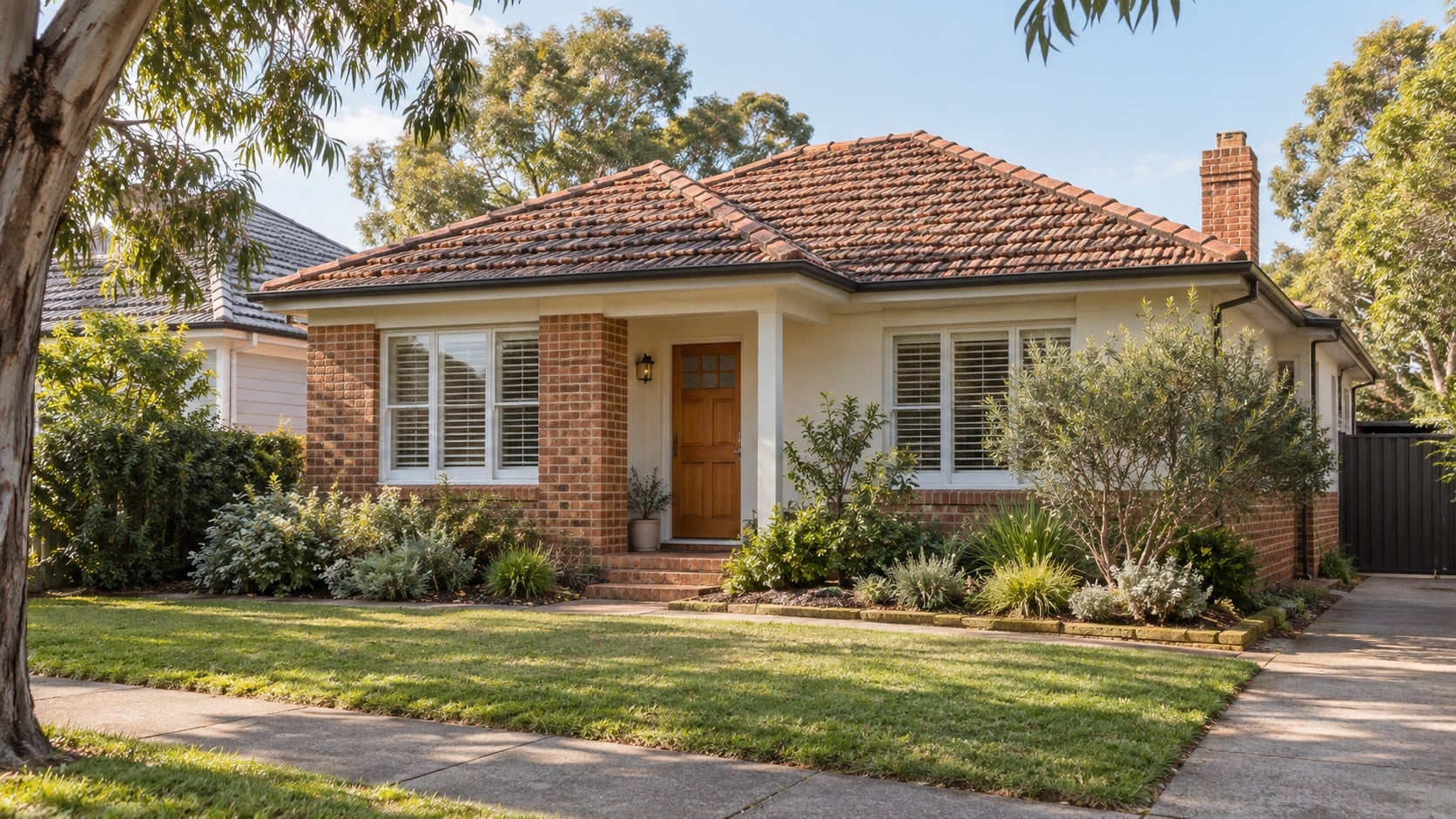
First home buyers in NSW may qualify for a $10,000 payment through the First Home Owner (New Homes) Grant (FHOG). Eligibility depends on the property, its value, your ownership history and residence requirements. [1]
The separate First Home Buyers Assistance Scheme provides a full stamp duty exemption for eligible home purchases valued at $800,000 or less, and reduced duty for homes above $800,000 and below $1 million. Each scheme has its own eligibility rules. [2]
This guide explains the first home buyers grant in NSW, the property price limits, who can apply and the steps to claim available assistance.
How much is the NSW First Home Owner Grant (FHOG)?
The $10,000 payment is per eligible property transaction, rather than per buyer.
| What you are buying or building | Grant property limit |
|---|---|
| An eligible new home, including an off-the-plan purchase | Purchase price of $600,000 or less |
| Vacant land with a comprehensive building contract | Combined land value, building contract and variations of $750,000 or less |
| An eligible home substantially renovated by the seller | Purchase price of $600,000 or less |
| An owner-built home | Total house and land value of $750,000 or less |
Ordinary established homes do not qualify. For substantially renovated properties, strict rules apply to the extent of the work and the property’s sale and occupation history. A listing described as “fully renovated” does not establish eligibility. [1]
For a building project, leave room in your planning for variations. A grant should not be the amount that makes an otherwise unaffordable project seem manageable.
Who is eligible for the NSW first home owner grant?
The main requirements are:
- Applicants must generally be individuals aged 18 or older.
- At least one applicant must be an Australian citizen or permanent resident at the relevant transaction date.
- All people holding a relevant ownership interest must be included in the application.
- Applicants and their spouses or partners must generally not have received a first home owner grant anywhere in Australia.
- Neither an applicant nor their spouse or partner can have owned residential property in Australia before 1 July 2000.
- For property interests acquired on or after that date, having lived in the property for six continuous months or more generally prevents eligibility.
For current purchases, at least one applicant must make the home their main residence for 12 continuous months, starting within 12 months of settlement or completion of construction.
An Australian Defence Force exemption applies where, at the commencement date of the eligible transaction, at least one applicant was a member of the permanent forces and all applicants were enrolled on the NSW electoral roll. Supporting evidence is required.
These are the main tests, not an individual eligibility assessment. Check unusual ownership, relationship or previous-grant circumstances before committing to a purchase. [3]
What if you or your partner owned an investment property?
An investment property acquired on or after 1 July 2000 may not prevent a grant if the residence test was not triggered. Confirm your circumstances with Revenue NSW. [1]
The stamp duty assistance test is different: previous residential ownership in Australia by you or your spouse can prevent eligibility, even if your spouse is not buying with you. Do not assume approval for one program establishes eligibility for another. [4]
First home buyers grant vs stamp duty assistance in NSW
Yes, eligible buyers can receive stamp duty relief through the First Home Buyers Assistance Scheme. This reduces the transfer duty payable on a purchase and can apply to both new and established homes.
The grant and stamp duty assistance are separate benefits. Eligible buyers can receive both, but each application must satisfy its own rules. For contracts exchanged on or after 1 July 2023:
| Key question | First Home Owner Grant (FHOG) | First Home Buyers Assistance Scheme |
|---|---|---|
| What do you receive? | A $10,000 payment per eligible transaction | An exemption or reduction in transfer duty; savings depend on the property value |
| Which homes qualify? | Eligible new homes, including qualifying substantially renovated homes | New and established homes, plus eligible vacant land |
| What are the home price limits? | $600,000 for a purchase; $750,000 total for qualifying building transactions | Full exemption up to $800,000; reduced duty above $800,000 and below $1 million |
| What about vacant land? | No payment for land alone; qualifying construction must meet the combined limit | Full exemption up to $350,000; reduced duty above $350,000 and below $450,000 |
| Must you live there? | Generally, at least one applicant must occupy for 12 continuous months, starting within 12 months of completion | For home purchases, an eligible buyer must generally move in within 12 months of settlement and stay for 12 continuous months |
| How do you apply? | Through an approved finance provider, or Revenue NSW after completion | Through your solicitor or conveyancer using the scheme forms |
At exactly $1 million for a home, or $450,000 for vacant land, the stamp duty concession ends. The grant’s $600,000 and $750,000 limits are inclusive. Residence exceptions and separate personal eligibility rules apply. [3][2]
Three examples of what this means for your budget
These illustrations assume all personal, property and residence requirements are met, with property value equal to the stated purchase price.
| Example purchase | $10,000 grant | Stamp duty outcome |
|---|---|---|
| Eligible new apartment for $580,000 | Potentially available | Full exemption |
| Established home for $780,000 | Unavailable | Full exemption |
| Established home for $900,000 | Unavailable | Reduced duty; the government’s 2026–27 table lists $19,593.50 payable |
The examples apply the NSW grant limits[1] and NSW Government assistance thresholds and current duty table[5].
Use the official First Home Buyers Assistance calculator[6] with your transaction date and property details, then confirm the assessment with your solicitor or conveyancer.
What does the first home buyers grant mean for Sydney buyers?
Sydney buyers use the same NSW grant thresholds. The $600,000 new-home purchase cap does not increase because you are buying in Sydney. A new apartment above that limit will not qualify for the grant simply because it is your first home.
If you are considering an established home, assess stamp duty assistance separately. For example, the hypothetical $780,000 established-home purchase above attracts no grant but can still qualify for a full duty exemption. That distinction matters when deciding which homes fit your budget.
Build your shortlist around the location, space and ongoing costs you can afford. Then check the assistance available for each property. For a Sydney apartment, look at strata levies, meeting records, planned major works and the building’s condition. For an off-the-plan purchase, have your solicitor review completion timing and contract terms, and ask your lender how finance will be reassessed before settlement.
A $10,000 grant should not be the reason to accept a property that is poorly suited to your needs or priced above comparable homes. Compare the total purchase and ownership costs, including any rent payable while waiting for construction to finish.
Moove’s Sydney buyers agent service can help you assess established properties against your budget and buying brief.
How to apply for the first home buyers grant in NSW
If you need the grant at settlement or for a first progress payment: apply through the approved bank or financial institution providing your finance. Complete the current application form and provide the required supporting documents.
If the purchase or construction is already complete: apply through the First Home Owner Grant customer portal. The standard deadline is 12 months after settlement or completion of construction.
You will need your signed contract, identity documents and evidence relevant to your transaction. [7]
Check the Revenue NSW identity requirements[8] early, including any documents required for your spouse or partner.
Stamp duty assistance is a separate application. Give the relevant forms and supporting documents to your solicitor or conveyancer to arrange the assessment. [2]
Can you use the grant as your deposit?
Ask your lender when grant funds can be released and accepted towards your purchase. Do not assume settlement funds will cover the deposit due at exchange. [7]
What other government support can NSW buyers consider?
Australian Government 5% Deposit Scheme
Eligible first home buyers can purchase with a deposit from 5% without paying lenders mortgage insurance. The government guarantees part of the loan; you remain responsible for repayments. Property price caps, lender approval and ongoing residence obligations apply. This scheme has no income cap. Apply through a participating lender. [9]
Australian Government Help to Buy Scheme
Available in NSW, Help to Buy offers eligible buyers shared equity support with a minimum 2% deposit. The government can contribute up to 30% for an established home or 40% for a new home and shares in changes to the property’s value.
All applicants must be Australian citizens. Permanent residency alone is not sufficient, unlike the citizenship or residency test for the NSW grant and stamp duty assistance schemes.
Help to Buy has 10,000 places nationally each year, so participation is subject to availability as well as eligibility. Current annual taxable income caps are $103,000 for individuals and $165,000 for joint applicants and single parents. Other eligibility, property limits and ongoing obligations apply. It is not a cash grant, and the government’s equity must eventually be repaid. [10]
First Home Super Saver Scheme
This helps eligible buyers save through voluntary super contributions. Up to $15,000 of eligible contributions per financial year and $50,000 overall can count towards the scheme. The amount released depends on contribution type, applicable tax treatment and associated earnings. It uses your own savings; the ATO determines what you can access. [11]
Check how programs interact before adding their benefits together. Help to Buy permits eligible grants and stamp duty concessions but excludes certain other government purchase assistance, including guarantees. Your lender should confirm the combination available to you. [10]
Frequently asked questions about the NSW first home buyers grant
Is the grant income-tested or taxed?
No. The NSW grant is not means-tested and the payment is not taxable. Your income can still affect borrowing capacity and eligibility for other programs, including Help to Buy. [1]
Do we each receive $10,000 if we buy as a couple?
No. The grant is per eligible property transaction, not per person. Two eligible buyers purchasing together receive one $10,000 grant. [1]
Can temporary residents apply?
A temporary resident buying alone does not meet the grant’s citizenship or residency test. At least one applicant must be an Australian citizen or permanent resident when the eligible transaction commences. For a joint purchase involving different visa statuses, confirm eligibility before signing. [3]
What if I move out before completing the residence requirement?
Contact Revenue NSW immediately. If the required occupancy period is not met and no exemption or variation applies, you will need to repay the grant. Stamp duty assistance has separate residence obligations. [1]
Can I claim the grant on an inherited property?
No. Inheriting a property is not an eligible purchase or building transaction. An inherited ownership interest may also affect eligibility for a later purchase; check the timing and occupation history. [1]
Can I qualify if I own property overseas?
Overseas ownership alone does not rule out the NSW grant. You must still satisfy its Australian ownership-history tests and all other conditions. Other programs, including Help to Buy, have different ownership rules. [1]
Choose the right home as well as the right assistance
Start with a budget that includes the purchase price, finance costs, inspections, legal fees, moving expenses and a buffer for unexpected work. Then account for assistance you have confirmed you can receive.
When comparing properties, consider location, condition, strata costs where relevant and recent comparable sales. A $10,000 grant is useful, but paying too much for a qualifying home can erase that benefit.
If you are considering professional buying support, our guide to buyers agents and selling agents explains their different roles. Review Moove’s service options and pricing so you can include that cost in your budget.
Planning your first purchase in NSW? Talk to Moove about your budget, preferred suburbs and the established homes you are considering. A clear buying brief helps turn your budget into a focused property search.
Information current as at 11 September 2026. This article was checked against the linked official government sources on that date. Grant amounts, thresholds, eligibility rules and scheme availability may change. This is general information, not personal financial, tax or legal advice. Before signing a contract or relying on assistance, confirm the current rules and your eligibility with Revenue NSW, the relevant scheme administrator, your lender and your solicitor or conveyancer.
Sources
- Revenue NSW grant rules
- Revenue NSW stamp duty assistance
- Revenue NSW application and lodgement guide
- Revenue NSW assistance scheme eligibility
- NSW Government assistance thresholds and current duty table
- First Home Buyers Assistance calculator
- Service NSW application steps
- Revenue NSW identity requirements
- Official 5% Deposit Scheme
- Official Help to Buy Scheme
- Australian Taxation Office